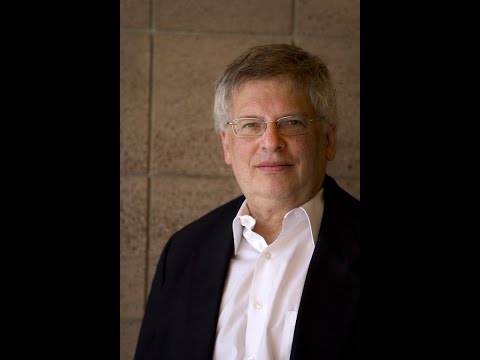
Carolyn Dille — Meeting the moment
Sunday, March 8, 2026
Good morning, good friends. It's good to be back with you all on this wonderful spring day. I hope you're all doing well.
Spring days are notably days of change, and that's the way it's been here with the weather and with the larger weather that's in our world — the very changeable spring this year. That's especially why, because there are so many changes, and some are momentous even. The word that's out there in the zeitgeist a lot is "unprecedented." I don't know about that so much, because it seems, taking even a cursory view at human history, everything has pretty much been precedented before. And what we come back to in our practice — and of course many other peoples that have practices also return to this — the basics and the fundamentals of human nature and of Buddha nature, however you want to term that, remain pretty much the same.
However, it's really great to be back together with you in our small boat sailing through all these changes. Sailing together through turbulent weathers, turbulent times. And sometimes the weather within each of us is turbulent for various reasons. And of course, the name of our small boat is Sangha.
I like to remember words. I'm a language-oriented person, a writer and a poet, so I like to remember where words came from, as maybe another insight into the wideness of their meanings. Sangha is from the Indo-European language roots meaning "as one," "together with," "in contact with." And that's what we are today — together, in contact with each other through different means, wonderful means. Though we know we're not one being in a very basic way through our six sense doors, we have a more subtle and powerful way of knowing that we all are one, inextricably interconnected together. And this is really the foundation of all human knowing and what Shakyamuni Buddha pointed to. We are often born knowing it, but we often forget. And that's one reason we gather and one reason we practice.
So my question to myself in this period — for myself and for everyone — is how we meet the moments we're living in now: as human beings, as Buddha nature beings, as Buddha Dharma Zen practitioners. How can we remember all of these many things that we are as humans, and the many connections we have with others, when these storms and changing conditions keep rolling in?
And I believe it helps — for sure it helps me — to recall that we probably wouldn't have survived. If you think about the little history of survival that we know of ourselves as just beings on this planet, I think we wouldn't have survived from the earliest single-celled animals and creatures unless we somehow knew this. It certainly looks like humans from prehistoric times who left the paintings and drawings in caves and on rocks knew about their connections to this greater matrix that we all live in — their connections with other animals of all sorts, other beings and creatures, and not only that but the earth itself, the sky, the elements. Those early human ancestors knew all of these things. They knew somehow this subtle and deep mystery of being all one, and have left those clues for us, left their understandings that we have later discovered.
That's hard to remember because of another quality we're born with: fear, which is both necessary for our survival and a cause of our delusion of separateness. And as we keep discovering — this morning and again and again, each of us in our practice — there's a way of sitting down patiently, quietly, where we remember. Perhaps not immediately and perhaps not continually. In fact I would say never continuously, depending on your time frames. And that's why the example of Shakyamuni Buddha is so wonderful and powerful, because he could remember this quality that we have of being all one and knowing that deeply and integrating that with all the other parts of us, such as fear.
So we sense this in our bodies. We can feel it in our heart-mind. We sense it as all being one together within ourselves, and we feel that when we're with other people. We feel how we can trust ourselves and how we can trust others, how we can help others even as we stumble along lurching from mistake to mistake, delusion to delusion.
So this simple way of zazen, shikantaza — just sitting, allowing the heart and mind and body to find the ease and joy of simply sitting — in Dogen's phrase, to meet all of this: to meet all of you, and to meet what I can see outside my windows, the birds in the birdbath, who are more numerous now that it's spring. To meet all of this and exclude nothing, including what I read in the newspaper or what I have seen unfolding before me in pictures and videos, the mystery of it all, even what we recoil from when our fear body flinches to see certain things, to know certain things.
So this practice brings us together, as I said, integrates us. And that allows us to meet the moments that unfold unceasingly as long as we're alive. And even to act without thinking — this practice encourages us, and by its repetition of coming to it again and again and again, to know without thinking how to act, how to be in this moment, how to meet this moment.
So we can act in accord with the first verse of the Dhammapada, the way of the Dharma. "In this world, hate never yet dispelled hate. Only love dispels hate. This is the law, ancient and inexhaustible."
So we know this way, many ways, directly and indirectly and through our nature — to share, most fundamentally. We share language. We share our experiences. We share kindness and benevolence. We cooperate with one another. And we know this way through the teachings, perseverance, and kindness of Shakyamuni Buddha and all the Bodhisattvas and all of our ancestors and teachers that have shared the way with us. They have kept practicing with others and alone for millennia and now. And their words have touched innumerable beings, many of them not even known to history, not known to us.
I think of all the early Sanghas, whether lay Sanghas or monks and nuns who took robes and went out and begged and did not live lay lives — all of those names that are unknown to us. Many, many hundreds of thousands, I imagine.
So our nature — that's the part of our nature that helps us meet the moment. And Dogen Zenji has a lot to say about that in the Shobogenzo. I'd like to pick up on some of his offerings that have helped me in those moments when the house is shaking, the bombs are falling, when my friend fainted on the cushion — many of these moments, small or large in our lives, when the fear body arises or when the joy body arises, to meet the moment without thinking if action is necessary.
Sometimes we need to reflect. We need to think. We need to use all of our resources as human beings. And our practice also helps us discern which part of our being — which part of our body, our mind, our heart — is necessary and helpful in this moment, off the cushion and on the cushion.
So a few of these, which I'll just put out as little stone markers along the way, little water drops along the way that may well disappear. But we can go back to them.
Some of these are from an interesting part of the Shobogenzo. Dogen Zenji compiled what he calls his introduction to the 108 Gates of Dharma Illumination, which he says he compiled from an early sutra, the Bodhisattva Protector of Dharma Realization Sutra. These are the ones that I find really useful:
Not quarreling stops angry accusations. Letting go frees from unwholesome desires. Benevolence, kindness, great friendliness conditions good in all situations.
There are three forms of joy: the rejoicing that keeps the mind calm and at ease, a love of enjoyment that keeps the heart pure. When we have those moments of feeling that we are just really at ease — and especially this happens in interactions with others, often through kindness — that we are acting from a clear heart. Joy keeps the heart-mind from joyless matters. Dogen says, in other words, not dwelling on the negative, not always looking at the downside, doom-scrolling in whatever form that takes.
Being patient helps us realize the wisdom of Dharma — patience, an endless practice, just focusing on noticing, allowing that to be in our lives. Being mindful of our impulses before they become actions. We do not increase unwholesome habits, and we increase wholesome habits.
So many of these Dogen picked up from early Buddhism. He was quite a scholar and knew a lot about the Pali Canon in whatever form that came to him. I'm not that much of a scholar, and I haven't looked up all the sources of how Dogen discovered these kinds of reminders from Shakyamuni, but I know he weaves those throughout all of his talks in the Shobogenzo.
One of my favorites is the four integrative methods of the Bodhisattva. That is: kind speech — our gift for language, what we have to work with; embracing and sustaining right actions for every good and all beings; inclining the mind toward cooperation, as Dogen puts it in one of the integrative methods — toward cooperation, toward harmony; recognizing with mindfulness our thoughts, our impulses, our emotions; and giving everything as a gift. As Shantideva says, even your enemies are benefactors, because you are given the chance to practice forgiveness.
So in our vows, of course — another language, other ways to keep practicing and embodying these vows. The Bodhisattva vows, precepts positive and grave, are on-the-ground compassion when we embody and enact them in the everyday moments of our lives. Their language is very broad — wisdom, compassion — that can sound pretty conceptual. But that's also excellent for understanding the big picture and not getting too caught up in taking these practices as only "I must do these in order to become more realized, more Bodhisattva-like." We can go off the edge in so many ways. That's why this practice is also called the middle way.
So they're good, but sitting down and keeping on sitting down is how we come to feel them integrated in our whole body-mind. And that's when our sitting practice and realization shows up. And then when we get up and go out into another form of practice — off the cushion, out of the zendo, out of our regular at-home sitting place — how we find this helps us: how we speak with a friend whose actions are hurting themselves and others, what we can do to meet the harmful actions of those in power. And it helps us remember that joy has many forms and that we can attune to those forms. They help keep us in balance, especially in difficult times.
And spring is a wonderful time to tune into that aspect that Dogen points us to — to remember the three forms of joy, keeping the heart-mind from joyless matters, remembering joy, recalling benevolence, which is well-wishing for others and for oneself, and kindness to others and to oneself.
Dogen says, "Knowing another person's kindness is a gate of realizing Dharma. It keeps the wholesome roots from being abandoned. Repaying another person's kindness is a gate of realizing Dharma. It does not ignore the debt."
I think we are kind by nature. And we remember that we have countless benefactors, including all of our ancestors, and including those first single- and multi-celled organisms that we all come from. And as we go about our days, we feel how each kindness repays the debt that Dogen mentions. Our natural kindness is a seed. And though we open that seed early as infants, we nurture it and tend to it as adults, because we have many seeds. We also have the seeds of greed, hatred, and delusion. And that's what practice helps us see — this whole picture, the big picture of meeting all of us. When we can meet all of ourselves individually, then we can meet more of everyone and everything else.
Kindness is limitless — like gratitude, it's the other side of gratitude, if you will, or another aspect. And sometimes that seems overwhelming because there are so many people whom we see that we don't believe deserve kindness. And we should be clear that there is a big difference between recognizing immoral or unskillful behaviors and shutting our hearts against those who are enacting those behaviors. This is one thing I think wisdom and right action mean together. It's seeing clearly — not pitying, and not turning away from, but seeing what I can do, what each of us can do, in meeting these moments when these situations arise.
The people in our current administration are humans who suffer old age, sickness, death, loss, separation from what they love, and the constant flux of change, as we all feel. And they suffer from greed, ill will, and delusion in all of their forms, as each of us does to some extent. And so I feel that returning to these things that Dogen points out — sometimes even just for a period focusing on one or another, joy or kindness, benevolence — helps us meet the moments in our lives.
We never know what will come around the corner, what the next moment will be. That's what we're about, I think, here in this practice. So being attuned to kindness and benevolence in ourselves and toward others helps us to see what right actions we can take in our personal lives and in our larger communities. These opportunities are with us in every moment that we breathe.
So I'd like to close my remarks with two poems, and then I'm really interested in what you all have to say about meeting the moments in your lives, or meeting the moments in change, or whatever else you have to say.
The first is one of Dogen's spring waka poems:
Humble spring has come.
Since then, people gather young greens
growing in the ancient field.
And this one is by a contemporary American poet, Stuart Kestenbaum, and it's called "Joy":
The asters shake from stem to flower,
waiting for the monarchs to alight.
Every butterfly knows that the end is different from the beginning,
and that it is always part of a longer story,
in which we are always transformed.
When it's time to fly, you know how,
just as you know how to breathe,
just the way air knows how to find its way into your lungs,
the way geese know how to depart,
the way their wings know how to speak to the wind,
a partnership, a feather and glide,
lifting into the blue dream.
I thank you very much for your attention, and as I said, I'm delighted to be with you and to hear from you all. Thank you.
---
Question: Thank you so much, Carolyn. So timely, your comments, given the change into the new season and given what's going on in the larger context of our lives. We'll open it up to some questions. Please raise your hand and I'll point you out so we're not colliding, and restate your name so Carolyn knows who's speaking.
Question: This is Bob. I like your poem on joy. Joy is so hard to come by these days and yet so necessary. My comment is from Buffy Sainte-Marie. She says, "Keep your nose to the joy trail." I'd like to hear your comment on that.
Carolyn Dille: That's great. I remember seeing Buffy Sainte-Marie — maybe you do too, Bob. That's one reason I always bring in poems. Dogen, of course, writes very poetic talks and writings in general. Dogen was really a poet-monk, I think. But the poets and the songwriters — which Buffy definitely was — they speak to that part that I mentioned at the beginning of the talk, that is the mysterious part that's harder to put into discursive language. But it goes into the heart and the whole body, really. You feel — I feel, and many people do — that poems and songs, even songs without music, or other forms of music, singing — the human voice is an instrument of music. So I feel that Buffy certainly contributed with that wonderful metaphor and image. Thanks for bringing that, Bob.
Question: Mark again. Last week was my father-in-law's 90th birthday and we were in Mammoth skiing — he still skis, for about an hour, though he did two hours one day. There were about eleven of us, family members and friends, all together. Spending time with him reminded me of impermanence and change. I had a chance to ask him how it feels to be 90, and his reply was, "Presence. I'm ever so present. I can't think about tomorrow or what I did yesterday, or whether I'll ever ski again. I'm just here right now." I just thought that was so remarkable, to have that present-moment awareness at his age. It was inspiring just to hear that. And it reminded me that, as you were saying about the changes — internal and external — the only thing we have is our present-moment awareness to help us through it. And joy is one of those tools that we can grab out of the toolbox. Thank you.
Carolyn Dille: Thank you, Mark, for sharing that story. That is very inspiring to me — who's closer to where your father-in-law is than to where you are. Skiing at 90 — yay! That's wonderful that you could share that with us, and to have it so close in your own family. That's a gift. And you sharing it with us is a gift also. Thank you.
Question: Carolyn, shout out, Dave here. I really appreciated your comments about the administration that our country is currently under politically, and the recognition that the people in that administration are suffering and going through the same things all of us are going through — old age, sickness, and eventually death. My question has to do with the recent news about one of the cabinet members losing her job — a person I associate with a lot of unkindness and harsh behavior toward others — and the piling on that's going on now about her alleged misdeeds and some personal matters. I find myself almost gravitating to read those stories and to be part of the piling on. I'm trying to understand what it is about us that goes after that, and sort of wants to see the enemy fall. Our practice, we hope, opens a broader view of other people in our lives. I'm struggling to understand why I get some gratification out of that and how we resist the urge. Thank you.
Carolyn Dille: Thank you for that really deep question. It's really a question about why we're called to practice. One thing is that the "why" is usually a good thing in practice terms to let go of trying to figure out — not that we can't, in a way, figure those things out.
What I would say to you, and what I say to myself, is that when I find myself gravitating toward unwholesome states of mind, as Dogen points out, I can find — not joy, but a kind of ease and happiness — in recognizing that I am aware of these. So each step along the way of being aware, you are recognizing that that is part of the whole picture. That is part of human nature too. And that is why Dogen kept practicing. Shakyamuni never stopped sitting. He never stopped practicing his whole life — sitting and walking. That's what he did. And mindfulness, being aware in any of the four body postures, which I recommend keeping aware of, because sometimes you can be aware in your body before you can be aware in your mind.
You're aware that this is human nature, and you're part of human nature. You are recognizing that they, in fact, aren't so different from you. And I want to be clear about my own feelings about the world we live in now too, because I have, like everyone, complicated feelings about — to use the most common, broadest term — social media. Things get amplified now in a way that they didn't when I was going through similar kinds of events in college in the late '60s and early '70s. There was plenty of amplification then too, but there are forces actually working to condition us now. I don't want to be naive about those, and I don't want to see practice as a way to even overcome all of those.
So I just try — that's one reason I love that particular spring waka by Dogen, when he says, "Humble spring has come." The season returns with humility. I want to keep close to not knowing all the answers. I want to keep present to the fact that the season just returns. Human nature just arises in the form of greed or hatred or "those people." And there are platforms for that now — incredible platforms for everybody to express their human nature. It's overwhelming often.
So that's where discernment comes in, about keeping aware of what people do so that you can make judgments about what you might want to do — actions you might want to take in a broader sense, in terms of politics or action in your community, whatever. And yet recognizing that the piling on is not kindness to oneself. We often tend toward judging ourselves as though we're not living up to a standard. But you're recognizing it, being aware. That's the basic key. Those awarenesses that come to us through sitting down — those are the ones that matter, whatever form they are, even of our mistakes and lapses.
There are many little gathas, or things like that, that I have seen and even written — I have a whole collection of poem-gathas about forgiveness of oneself and others — forgiving ourselves and others for our mistakes and lapses, our weaknesses and blindness. We don't know everything. I hope I'm not going on too long, but I'm really trying to address your question, which I think is such a deep one.
Question: Thank you for going on for a while. It was really helpful because it's very present for me, and I really appreciated your comments.
Carolyn Dille: I would just end by saying, Dave, you're not alone — misery loves company, right? There are many, many people in the same place.
Question: Are there other comments or questions for Carolyn this morning? That's the meaning of Sangha that Carolyn talked about — Sanskrit meaning "to stick together." It even sounds like it's sticky. But it has a downside. There's a tendency to pile on and be stuck in that place with what's going on. I think that's where Carolyn's comments on awareness pay off.
Question: I want to thank Bob for bringing up that today is International Women's Day, and use that as a kind of bridge to an experience I had yesterday in which I felt connected to all women, particularly mothers and grandmothers, who internationally are all dealing with the stress and concern about loss — because there are so many children and grandchildren being snatched, or now with the escalation of war, the threat of danger.
Yesterday my son brought my grandson out — he's three and a half — to be with us while my son got some work done out at Sedgwick, which is a university preserve, an 8,000-acre preserve in the San Ynez Valley. Sammy was with us all day. People came and went to see him, and there were some very poignant times of touching him and touching our hearts, and long-standing forgivenesses going on. And then when Ethan came back to get Sammy and they were driving away, I just felt such enormous depth to my son's kindness in those settings. And then this almost panic took me over — that they were going to drive over the pass, and what could happen. I just felt that connection with all the women who are standing in that same spot watching their loved ones leave, all over the planet.
So it was very helpful to have some balance with you today, Carolyn, and to feel your steadiness and your warmth, and to feel our sticky Sangha, so that we can all share these experiences together and find those moments of joy and sniff those out for a while. Thank you.
Carolyn Dille: Thank you. Yes, and thank you for the reminder again about International Women's Day. I noted it yesterday that it would be today, but then when I woke up this morning, it didn't come to mind.
Question: I think with that pause in the conversation, we may have exhausted our questions and comments, Carolyn. I want to thank you on behalf of everyone here at Santa Barbara Zen Center for joining us. It's so good to see you again, and thank you for brightening our lives and turning some lights on this morning. We appreciate it. Any parting comments or thoughts before we log off?
Carolyn Dille: I would just echo what you said. I thank the Santa Barbara Zen Center for being there and brightening my day, and I thank everyone who spoke, and I thank Tova, whose remarks about family and the mothers certainly brought up those feelings in my body, heart, and mind. Yes, there are many aspects to being human, including the poignancy of being alive and seeing that passing — but also seeing that we are still here and enjoying being together. Thank you.