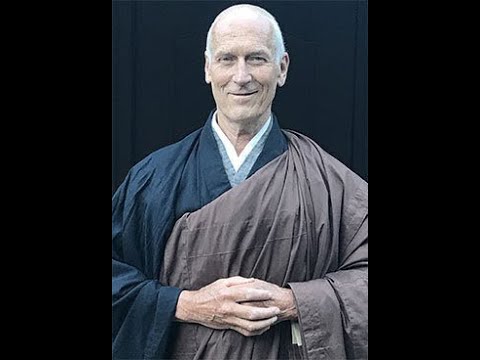
Julianna Raye — Mindfulness and Zen: Two Ways, Same Home
Sunday, November 9, 2025
# Mindfulness and Zen: Two Ways, Same Home
Julianna Raye
Santa Barbara Zen Center
November 9, 2025
All right, welcome everybody to our dharma talk today. I'm Michael. I want to introduce Julianna Raye, who's joined us today. I thank her for being here in person to do a dharma talk. I'll just do a brief introduction biography for Julianna and then I'll turn it over to her.
So Julianna is the designer of the Unified Mindfulness teacher training. She's devoted to deepening people's ability to practice and understand research-supported mindfulness and to empowering anyone to guide others in practice. She's been training individuals and groups in the Unified Mindfulness system for over two decades. I'll just do some brief things of her background. She has a bachelor's from Duke and she's CEO, lead curriculum designer and head trainer of Unified Mindfulness, dedicated to disseminating Shinzen Young's comprehensive mindfulness meditation system through the creation and presentation of educational programs and teacher training certificate programs. And I also found this very fascinating about Julianna. She has over 150 weeks of silent retreat training in both mindfulness and Shinzen traditions and has completed more than 20,000 hours of formal training.
And I still don't know a thing. She's still a beginner.
So Julianna, with that, again, thank you for being here and I'll turn it over to you.
Thanks so much. Elisa so graciously invited me here today because we know each other through the Zen track, but I came to that Zen track through the mindfulness track. And I've sort of straddled both worlds over the past couple of decades to three decades. So she thought I might be able to shed some light on the relationship between what we call mindfulness practice and Zen. My familiarity is with Rinzai Zen. So I'll be sticking to what I know.
But what I wanted to begin with is actually just to start at the start of how we get to know anything. How do we get to know anything? And it is typically by way of contrast. We typically start off saying, well, this is what I do. It's Zen and it looks like this and this is what they do. It's mindfulness and it looks like that. And so we set up a contrast in order to understand because how else can we discover anything except by way of the difference? How else can we come to know something except by way of perceiving that that something is other than us.
So I was very moved this morning when we were reciting, I think it was on page—I can't find it now—what we were reciting was illuminating the value of differences. And it's something that in this time is hard to find value in because we see how alienating differences can be. When we self-identify with a position, that's when the suffering starts. The suffering starts when we self-identify with a position. But inherently differences are what lead us to the discovery of oneness. It can only be, there can only ever be the journey of believing ourselves to be separate and discovering that that was mistaken.
So we need to embrace that it is of our nature to take that journey, at least at this time on this planet, that this is the journey we're all engaged in. The mistaken belief of our separateness and all the pain that causes, all the suffering that causes, and the extraordinary discovery of our non-separateness. And this journey is in every little moment because there are no moments. The idea of a moment itself is a constraint falsely applied for the purpose of navigating this world in this body, for this window of time, that this body is moving around in this world.
So even in this contrast that we set up between mindfulness and Zen, we can find both the habit of perceiving differences and also then the journey towards discovering non-separateness, even in this little habit that we do all the time of saying, I'm this way not that way. I believe this, you believe that. Every time we encounter those moments of difference, that represents an opportunity for us to traverse the impression of difference to find what is truly non-separate. And you could say that as practitioners, whether we're practicing in mindfulness or Zen, that is our job. That's our job because no one's going to do it for us. We're here to do that job.
So with that context in mind, I'm going to speak a little bit about mindfulness and Zen as I understand them from my limited perspective and connect some dots around those relationships. I teach a system called Unified Mindfulness, which, as mentioned, was developed by Shinzen Young. Shinzen was a translator for Sasaki Roshi, which is how Elisa and I know each other. And so he also straddled, in fact, not just those worlds, but all contemplative traditions. He was ordained as a Shingon monk in Japan. So he became interested in what unifies all approaches to meditation practice. And he spent about 40 years tinkering away and finding the connections between practices and landed on a way to understand any method of meditation in terms of the fact that it develops a set of attention skills.
So all meditation practices develop certain attention skills and he identified them as concentration, sensory clarity, equanimity. And then any meditation tradition is going to have a way to cultivate these skills. I can get into more detail about the skills, but I know we have only a short time for the talk. So I just want to give, I want to stick to this connection between mindfulness and Zen as I see it.
So with the understanding that if you're willing to go along with the idea that if you're in any tradition or even non-traditions, that we have these capacities, the ability to attend, the ability to focus on what we choose, the ability to discern, make clear discernment between this and that, and also the ability to detect subtleties in experience that may then yield the awareness of the sameness, the connectivity of experience, and this ability to allow experience to happen freely. These are abilities we can cultivate. We can call that equanimity, the ability to allow experience just to happen.
So if we say that, yes, meditation develops these capacities, then it's a matter of how. How does it do it, and what's the method? And we can say that all practices share in common an intention to practice, that we come, we arrive to this place, even if we just sit and do nothing, even if that's our method, we make a commitment to spend a window of time sitting and doing nothing, or sitting and focusing on the breath, or focusing on whatever it may be, slow walking, or fast walking, or chanting. So there's an intentionality, you could say, we can debate where that intentionality comes from, but we can say that a kind of signature of any practice we do is this conscious intention to show up to it in some way, and mindfulness and Zen share that in common.
One interesting contrast, I think, between the methods is an emphasis on an external setting that supports the internal journey, or an internal strategy that supports the journey. We can say, when you're asked, for instance, to do counting or focusing on your breath, that's an internal strategy that supports the development of your attention in these ways that I mentioned. There are other methods, but let's just say that's a method for an internal anchor, so that you can develop your capacity to focus on what you choose, your capacity to detect subtleties, or to discern distinctions between this and that, and your ability to allow experience just to happen.
There's also an external setting that can support your ability to develop your attention in those ways, and here we are, we've got our cushions, we have our rituals. One thing I really love about Zen, which I think generally distinguishes it from mindfulness, is the highly ritualized nature of the Zen practice, that everything we do, it's choreographed, and that choreography becomes a way to get out of the thinking mind, so that we can develop our attention. The rituals around Zen, which of course evolved in the monastic setting, they really serve us as an external anchor and as an external choreography in which to develop our practice.
And I would say that mindfulness, as it's understood in kind of modern American setting, doesn't have that ritualization. However, you could choose to with mindfulness ritualize your external world. What mindfulness tends to emphasize is the inner strategies, and what Unified Mindfulness has done, which maybe makes it distinct from other types of approaches to mindfulness, is to center itself around the commonalities between approaches, so to say, again, all techniques are developing concentration, clarity, and equanimity, and therefore it's less important what technique you do, and it's more important that you're intentionally developing these skills, because that skill development is what leads to over time with practice the clear realization of non-separateness, that we could say that that's in the sense that's the same journey home that we're all taking just through different methods.
So the way Unified Mindfulness has gone about that is to introduce a particular practice that emphasizes this skill development and shows you how your whole sensorium can be divided into three groups: what you see, what you hear, and what you feel. And so we introduce in Unified Mindfulness a technique that starts with that, See Hear Feel. See Hear Feel includes, it's basically just another parsing of the five senses, and it includes what you see in the world, what you see in your mind, what you hear in the world, what you hear in your mind, what you feel physically, what you feel emotionally, whether that is activated at any given moment, or restful at any given moment. And so you do a practice around that. It's a noting and labeling practice, which is drawn from Mahasi Sayadaw, from his noting methodology, which is this kind of punctuated focusing, repeated punctuated focusing, that lasts for several second window. And that's an internal practice you can do.
Labeling is basically identifying, is it See, or is it Hear, or is it Feel. So we start there to say, hey, your whole sensorium is a gateway to discover, ultimately to discover non-separateness. So that's the method, you could say, that Unified Mindfulness uses, in contrast to maybe the method that you would do when you do Zen practice, which varies from place to place, but involves generally you come and you sit, and maybe you're given some simple instruction about breath or counting, maybe not, maybe you're just sitting. So that's a contrast.
But another contrast, I guess I want to highlight is, in Unified Mindfulness, a person can come to the practice with any intent at all, in terms of their life goals. So they might come to the practice because they want to improve their tennis game, something as mundane as that, and we say, sure, let's teach you how to improve your tennis game by developing your attention, because if you can concentrate better, you're probably going to be better at tennis. If you have this discerning capacity, sensory clarity, probably going to be better at tennis. If you can let the self-critical thoughts come and go in your mind, probably going to be better at tennis. Great, let's let you start there as a point of entry to discovering how to develop these attention skills. It's your life, you determine what matters to you. Tennis is what matters to you, we're here to support you. And here's how you can do that.
So that allows people to get into it for whatever, it lowers the barrier of entry, you could say. So people can get into it just for the purpose of improving their tennis game, and if they want to, they can limit it to that. Typically, that's not how it unfolds. Typically a person makes discoveries as they're practicing, they have insights. Oh, huh, yeah, this can actually be applied in other settings, not just in tennis, this ability to concentrate, have clarity, have equanimity. And so they might then, once that seed is planted, it might take root.
So that's a way that you could say that mindfulness differs from Zen. It also leaves the ethics and values in the hands of the individual. It says, okay, you come to this practice with your own set of ethics and values, we're going to trust you to adhere to that. Maybe you're a Christian and you have that set of values, and that's what's important to you, we're going to trust you to adhere to that. So there's a lot of not getting into any territory which might represent a barrier of entry for the practitioner. That's sort of an ethos, you could say, of the Unified Mindfulness approach. And that is one way in which it is different. And that means also that maybe we sacrifice a certain kind of sacredness in doing that.
So people who show up to Zen practice, they might not realize what they're getting into, but you're going to be drawn, I would say, at least intuitively, to a kind of sacredness that Zen represents, and it's in right off out of the gate, the Gateless Gate, it's right there. You're hearing it, you're saying it, you're internalizing the depth of the practice right as you enter the doors. So that's, you could say, a contrast, how is it different.
And of course, there's beauty in these contrasts that we discover. We can see the value in lowering the barrier of entry. More people are going to get curious about it, more people are going to engage in it, and maybe they discover that the depth of it becomes meaningful to them at some point. Maybe they go through a life crisis and discover, hey, this practice was really there for me in my life crisis in a way I didn't anticipate.
So on the flip side, the beauty of entering into the sacredness, right at the start, is important, and to be someone who, right from the start says, yeah, let's go for the deep end of the pool right now.
So, I guess all this to say, that there are ways we can contrast how these practices exist in the world, how they represent an entry point for anyone who is interested in pursuing this kind of practice. And then we can say that there are these commonalities that any method you do, whether we call it mindfulness or Zen or whether we call it anything else, TM or whatever you want to call it, they are helping us develop our attention in particular ways because it is the disordered attention that is at the heart of our misunderstanding, our fundamental confusion about our nature.
The belief that we are separate comes from the relationship to the sensorium and to the confused signals, from the confused signals of this sensorium itself. So we have to work through the confused signaling and the misinterpretations and the alienated relationship to ourselves. We have to work through that to discover the truth that we were never separate. And so however we do that and however we come to it, it's so good that we've come. It's so good that we're here together, doing this practice.
And so I feel very grateful for being included in your group today, and honoring your friend who passed. And I feel very hopeful that we can come together and share this practice together, what it means to us, regardless of whatever seeming differences each individual may have, and that there is this rich opportunity for everyone who does this practice to center non-separateness, to center the connectivity. It's our responsibility, no matter what's going on in the world, not to get swept up in the stories of separateness, to know the truth.
Thank you everyone for your time.
Michael: Well we do, we do have some time, if you're open to discussion.
Julianna Raye: Yeah, absolutely.
Michael: Well we'll go to about 12, and thank you so much for your talk today. If anybody has anything you want to ask, say?
Question: I have to say that, I sat down with, hold on just a moment, I'm going to get my ears in. This helps me hear. Yeah, I want to say, I sat with Shinzen on several occasions, many, many decades back. Wonderful, very enjoyable experience.
My take is content describes context, and also context defines content, that we're sitting here, rather than in a bar, or whatever. So the greater context is what shapes us, and then as we grow mature, we initiate actions, activities to shape the context themselves, and that's called artistry. And if people are shaping that with a disturbed mind, as we see so often in politics, so many of the endeavors today, then that affects the content, which is why today, we're ten of us, rather than ten thousand of us, sitting. And so that is a question that is quite important to me right now, to see if that can be changed.
Julianna Raye: And the question being, how might we change the habits of mind that lead to the, in other words, how might we change that context? Is that what you're saying?
Question: Yeah, the paradigm itself, and the paradigm is everything from the chair, the book, the dress, everything that we as human beings create and talk. And so what I'm doing currently is challenging the entire historical trajectory that has gotten us into this contextual mess. And so much of what is happening today on YouTube is, you know, from a Zen perspective, it's all about our demise and how we approach it. And then the other is also about, oh, this is not me, this is all illusion. And neither speaks to, well, before enlightenment, chopping wood, carrying water. After enlightenment, chopping wood, carrying water. Meaning that, being in this, yeah, so we are materialized. And oh, this is not real, yeah, and that means it's such a frustrating encounter, whereas our addiction, what we're here, it won't inspire. It's limited, you know, collectively, which is the foundation for the expansion of hospitals. For example, for the teacher of mindfulness, we should be celebrating the deconstruction of a hospital.
So anyway, that's something I've been contemplating. Yeah, that's what I've been contemplating, that I've come to a solution that even my brothers and sisters here are not yet, and that is business.
Julianna Raye: Business?
Question: Yeah, what we do every day, focus. We come here after having focused 40 hours a week at whatever, and then we come here. Why don't we go there 40 hours a week to focus?
Julianna Raye: Yeah, yeah.
Question: And be acknowledged for it. So, so it's a whole flipping the script.
Julianna Raye: Yeah, it's, yeah, throwing out the old script.
Question: Yeah, yeah, but the hypnosis is so strong, and I'm quite involved.
Julianna Raye: Yeah, you were a catalyst. You were a catalyst, I just said.
Question: Oh, well, yeah.
Julianna Raye: I definitely relate to the flipping of the script, and I think that all we can really do is do our own work and then from that, that's where the change happens, including whatever wisdom bubbles up about the way it could have a ripple effect through the world.
Question: And suffering is also challenging the differences.
Julianna Raye: Suffering is?
Question: Suffering is.
Julianna Raye: Yeah, yeah, yeah, is what motivates the...
Question: Well, it also creates the heat and heat is what brings about insight.
Julianna Raye: Exactly, that's right. Yeah, there's this beautiful Thich Nhat Hanh statement about the garbage of our life, being the soil that produces the lotus.
Question: Similar, yeah.
Julianna Raye: Yes, that's the key, isn't it, to actually see the whole, everything.
Question: Yeah, yeah, yeah.
Julianna Raye: Yeah, thanks for sharing that, and that wish that we could all overcome the ancestral habits that led to this point right now.
Question: Thank you for your presentation. We've been here to share this morning. A couple things came in mind for me that I wanted to ask as you were speaking. One, two-part question. One is, I think a lot of us involved in Zen practice get a little bit hooked at the beginning when we read, a little bit hooked on this approach when we read some of what is fundamental teachings about suffering, about grasping and impermanence, and those things that almost at face value, you just strike these truths. Then there's this method and sangha and people kind of leaning into that, trying to figure out how do I understand this fully. So I think my first question was, I think that's what draws a lot of us to Zen as a path. What do you think draws people to universal mindfulness as maybe another path within them? That was question one. And then I'll add question two, which is within our tradition, there's also the opportunity to embrace the precepts as a way of living and also the eightfold path as a way of sort of conducting their lives. Is there kind of an equivalent on the universal mindfulness side?
Julianna Raye: So one is kind of what draws you to it and then the other question is, when you're not on the cushion or in...
Question: Right, so what are the guidelines?
Julianna Raye: Yeah, exactly. Did they contrast or are they similar?
Question: Yes, yeah.
Julianna Raye: So in terms of what draws you to it, I would say broadly speaking, suffering and the wish to be relieved of suffering. However, the individual characterizes that. And it could be, my doctor told me I need to relax. And so I guess I'm going to try this mindfulness thing. Or, I know I have this condition, anxiety, or I'd like to have more joy in my life. I once had it, what happened to it. So I think generally speaking, however people articulate that to themselves is what draws them. And that's important. How an individual chooses to articulate it for themselves in the Unified Mindfulness approach. Excuse me. We like to meet people exactly. I think I've got a frog. Thanks.
We like to meet people exactly in their self-defined need. So if you say, I'm looking for more fulfillment in my life, or if you say, I need to relax, we're going to take that as a point of entry and actually interact around finding a strategy, a method, a practice that is specific to that expressed need or interest. So we sort of, it's centered around the person, the individual, their ideas about what they need as a place to start.
Question: Is it a therapeutic coaching model?
Julianna Raye: It's not therapeutic in the sense that we're not psychotherapists and we don't delve into a person's psychological history or anything like that. It's centered around the individual so that we can collaborate on a practice that's going to be meaningful for them. And that takes a kind of experimentation. So we might start by focusing on relaxation and discover that the person actually finds that agitating and they prefer a focus where their eyes are open and they're looking at nature.
So we tailor it, and the fact that it's centered around these attentional skills, concentration, clarity, equanimity, means that we can adjust to find a point of entry for the individual that the individual is going to be motivated to do. So that's the aim of it is to leave it open. We say these skills can be developed whatever you're choosing to focus on. Let's find something that you find inspiring and motivating and that you'll stick with. And so it's about the habit formation right out of the gate.
So yes, that's sort of like what draws folks is the suffering, I would say it's the same. However, we want to describe that. But we can call it life goals. Or we can call it suffering. And it's just a matter of what's the language that's appropriate for the paradigm. And so we might say, well, what are your goals? What are your aims? But understood, kind of implicit in that is I want to get from here to here because I'm not okay with how here is. So it kind of is woven into it. Just a different take on it.
And then relatedly, the guidelines, we do have guidelines where we try to keep them as broad and basic as possible. And that is a way that it's quite different from from Zen. We have, for instance, a definition of practice maturity. What does it look like to be a mature practitioner? And in that, we include that you adhere to ethical standards that are set out by your community, by your religion, your professional standards. So we sort of include like, you need to abide by these, but we're not going to tell you what they are. We're just going to tell you that's part of being a mature practitioner is to abide by these. And then we have basic ones that we consider globally are important, like not stealing, that kind of thing.
So that's how we navigate that. And that was very intentional on Shinzen's part because of this issue of barrier to entry. How do we essentially make sure that ethics and morality are a component of this training? They have to be. But how can we do that in a way that gives a person, kind of respects a person's personal, what's meaningful to that person? We leave their beliefs to them. And we leave that setting to them. And we trust that they have that. And if they don't, then we say, okay, you're out of alignment. And so that's kind of how we handle it. It's just a different way to get to the same thing. And the purpose is to keep the barrier of entry low.
Question: Yeah. Interesting. That in Zen, I believe we come with the assumption that the individual has worked through many of their life issues. And the very fact is that I cannot sit for an extended period of time if there is a physical, emotional, psychological disturbance.
Julianna Raye: Yeah. So I think that's a good point that, well, for example, in all of these stories about how you have to sit outside the temple without food or water for days at a time to even be let in. You have to be the kind of person who can weather the intensity of a monastic setting. And that tends to come through culturally in Zen. That if you're showing up, you're ready to dig in and do some hard work. Whereas it's a softer landing for mindfulness. You can, I think that one of the downsides of mindfulness culturally as it is now is that there's a lot of passivity in it. You kind of go on an app and you just listen to a guidance and that guidance may or may not align with your actual experience. So there may be disconnect.
And I think the passivity, it's like the minimum intentionality. And I think that's problematic. It takes a lot of intention to show up for Zen practice. And in mindfulness where, Unified Mindfulness is basically trying to solve that problem by being interactive and making it less passive. And saying, let's meet you in your interests and your needs because that will motivate you to do the training. So that's kind of the relationship there.
Question: Thank you for such an insightful and concise overview. One point of entry I might introduce here is Haiku. A friend of mine, Arturo, leads hikes in Carpinteria on the Bluffs for the Land Trust. And we stop within one hour hike. We stop five times. And he says, when we stop, just observe what you're seeing. And the first line of the Haiku is, what do you see? The second line is, what do you hear? And the third line is, how do you feel? And I just found out where he might have got that from.
Julianna Raye: That's great. I love it.
Question: And then people can share or they don't have to. And then we move on. And it's such a mindfulness practice without even telling people what they're doing.
Julianna Raye: It is beautiful. I love it. And what you're pointing to as well is something that I didn't mention that I want to highlight as a strength of Zen, which is the spontaneity. It is the expression. Rinzai is all about the koan practice and you're going in there to manifest the wisdom without the intellect. You're just going in there to just be it. And we call it bounce in Unified Mindfulness because basically Shinzen wanted to kind of classify all the world traditions and at least have a way to show their relationships, organize it in a way that helps you see these relationships. And Zen is all about the chopping wood, the engaging in the Haiku, the expression. I think that's a distinguishing kind of a signature of Zen as well. So thanks for bringing that.
Question: Thank you. I already said thank you, but I'll say thank you, because it was a great talk. And it got me thinking about a conversation I was having at the end of the sesshin last month with another Zen practitioner. He was the Eno. And we were talking on the last day. And he brought up a really interesting point that I didn't really have an answer for. And so I'm kind of curious what your answer to this might be. And he was sort of asking about or pointing out, I suppose, the danger in, danger, those are his words, the danger in spiritual, I think he termed as spiritual non-religious practitioners. And mindfulness came up as sort of an example. And we talked a little bit about, this has been happening for centuries, the line edges. And we don't like how they do it in a different way. And that sort of thing. But just sort of the seeing this slippery slope in that, not necessarily Zen is about mindfulness. But just about people doing and saying, acting in the name of something. But it's not all there. For example, like you said, you kind of trust people to leave the ethics and values on their side of the fence or whatever. But what if those are, they don't have a great ethics or values system. I had thought today about like, well, what if there's a whole profit schema to this, whereas the Zen traditions are rather donation driven. So I'm just curious, maybe your thoughts on that. It's a great question. The scope creep, I guess, if you will.
Julianna Raye: Yes, yes. Yeah, I mean, I think there are risks at every turn. And really, our minds center threat and danger. Our minds center threat and danger. That's the orientation for most people on this planet. There's something dangerous going on. So, and that is why we are stuck in suffering. That's why we're stuck in separateness because the mind centers danger and threat.
So our journey through this practice is to de-center. We could say a fundamental function of this practice is to de-center the mind that has fixated around danger and threat and to center connection, connectivity. So, just to start there, that it's interesting, you said it. He said dangerous. That was his word. Let's start there. Because to your point, that is the thread that goes all the way back to the lizard brain. So what happens if we don't center threat and danger in our thinking? What does the thinking look like? We can ask ourselves.
But that being said, there is a valid concern there as well about what does this practice look like without ethics? Boring is one word that comes to mind. I mean, who wants to show up and do this as a, it takes, in other words, it takes a lot of hard work and discipline for you to see any positive results from this practice. So we could consider like what's the kind of person that engages in a practice like this without having any ethics. They'd be committing to watching the paint dry. It's not typical that somebody, do you see what I'm saying? It's a little, so there's that. There's the sort of self-selection process about who would show up and do this kind of thing.
But, that being said, I guess philosophically, I would rather people, I see a place for all of it, I guess that's what I would say. And I would rather people have some point of entry than no point of entry. And then it's, is it the worst thing if a workplace offers mindfulness training? There's this sort of like, well, but then are they convincing their employees to just stick around and be mistreated, because they have this mindfulness practice that can get them to have equanimity with any terrible thing that we do to them. And, there can be this idea. It's a great, fearful story to tell.
In reality, I think of it, the flip side of it. What if somebody gets exposed to mindfulness in a terrible workplace setting and realizes, hey, I'm out of alignment here. I'm going. Thanks for the mindfulness. I'm really clear about what a mess this is. And I'm not going to take it anymore. So, I don't think we can anticipate what the outcomes are of somebody actually internalizing this practice. And I think that the road to internalizing it is quite rigorous. And so I feel like that in itself creates a kind of self-selection. And generally speaking, I trust people that they are, they know what's best for them. That's my philosophically the stance. So, I don't know if that...
Question: Definitely. Thank you for that. It was kind of funny, too, because I didn't really think of the duality of Zen and mindfulness until the concept of it got put in front of me. And I really think it's hilarious how the mindset, oh, like, difference, threat, like not what I'm doing. What is it? And I ultimately came back to a very similar place of like, if there's a, if this is a way somebody can help, they can relieve their own suffering, great. And who am I to be the one that says, well, that's not the right way.
Julianna Raye: That's it. That's it. And personally, I can only speak about my personal journey. I started out with mindfulness and would never have been able to do Rinzai training had it not been for the foundation and mindfulness. That was what saved me for all those very, very long days.
Question: Yeah. Yes, I agree with you there that mixing up some of the traditions can be very helpful. Zen sometimes wants you to just chew the Zen part and stick with it, because you don't want to be doing too much shopping around. But then again, crossing into different ones can be quite insightful, too. And one of the ones that I carried quite thoroughly from the early age is yoga. And you've seen what that has gone through in iterations, whether it being early in the 70s, it was very, you had to find a yoga class in the basement of the Unity Church. Now it's on every corner and it's all the sexy clothing and all that. And you could get really mad about that. But I thought, wow, I'm so glad that at least it's out there.
Julianna Raye: Yeah. Yeah, yeah. Absolutely. Point of entry. And then people can find how much they want to go.
Question: Exactly. Yeah.
Julianna Raye: And I was really, so I took a trip to India for the first time. I've never been before and went to the, it was like a pilgrimage for me, went to ashrams and saw, I mean, they've done a really good job of monetizing. And the money goes towards good aims, good works. So yeah, this issue of monetization, I think there is the, there is the context of a certain specific culture, the culture of donations that is referenced. And yeah, I mean, I definitely understand the ambivalence about money in general and how that can color what happens when you monetize something? What's the effect of that? And it's, yeah.
Question: Well, monetizing is what do we value at all? Right. What do I want to empower?
Julianna Raye: Yes. Yeah. And what degree?
Question: That's it.
Julianna Raye: And it's, and it's cultural. And again, if we're thinking about reach, what's going to work in a western setting, what's going to work in an eastern setting, etc. So yeah, there's room for all of it, I think. And for people to just be drawn to what works for them.
Question: So, there is a saying, never go to India for the first time. Anybody who's been there knows what I mean. You can't prepare. I bring people for the first time. They're kind of lost, their eyes. You can't quite, they're just wanting to get back on the plane. But then they embrace it.
Julianna Raye: Yeah, I had a wonderful, but I was, I think being there for the purpose I was there helps to, I mean, I think if you're there, wanting to pay homage to these teachers, or to, or to other saints, that is very grounding in terms of, if you're there, you have an intention to why you're there, otherwise the chaos...
Michael: I just want to do a time check for us. We are at time, but if we have one last, any burning desires from anyone, this is your chance?
Question: Well, I said a quick thing to say, and then we can, because I wanted to ask you a bit more about the energy of sacredness. And how that comes about in organic ways through ritual, and then also how that comes about when we set intention. And I think from, for me personally, because I've been in the world of mindfulness, yoga, Buddhism, which is kind of the main avenues for me, and some other meditation techniques. But at the end of the day, what's drawing me into those spaces is the sacredness. So it took me time to figure that out and be okay with it, and to understand what brings that about. There's so many tentacles connected to what we call the sacred. So yeah, we should, sometimes I'll maybe email you or ask you more about how that's kind of met within the context of what you're doing.
Julianna Raye: I can answer you briefly now. So in Unified Mindfulness, again, Shinzen was really interested in creating a kind of classification system for across the field to say so that we could clearly see the relationships, both maybe what we could say is different about, but also maybe what's same. And he created this sort of happiness grid, which represents the ways in which people's, he organized essentially people's life goals into these five categories. And the categories are structured, their columns that have levels. And we could say that at the top level is the more surface way people think of their goals. For instance, they want to get rid of something that's not working in their life like they want to leave their job, or they want to have something like they want to get a new car, or something like that. So more kind of like, if I get that new car, I'll be in a better place in my life. That's what I want.
And then as you progress down the levels, it gets to the deeper levels that are about this practice. So the bottom two levels are more about this practice. So you go from, if I leave this job, I'll be happy, to, if I'm able to work with this discomfort skillfully, then I'll find relief in that, to the transcendence of, turns out this discomfort is actually non-separateness itself. And so that's how we handle a yearning for sacredness would be looked at through the lens of, okay, so this person's down at the bottom level here, that's what they're interested in. And we would treat it, it sounds kind of impersonal or lacking of sacredness. But then you would be coming to it with that intent, and you would meet teachers or guides in the setting of Unified Mindfulness who share that, and then you would be working together in that way, or you would be showing up to programs that emphasize that. And that's how we would do it. They have like that diversity there.
Question: Yeah, that's what I mean, that came naturally to me, but I would think some people don't even realize it's what they are reaching for.
Julianna Raye: Exactly. And, and then that would be something, it's so personal, and yet leads you to the universal.
Question: Yeah. So you're always walking that fine line with the sacred of, or I should say, I am, not getting too precious about it, and yet at the same time, it feels so precious.
Julianna Raye: Yes. Yes.
Question: So it's a strange tight rope.
Julianna Raye: Yes.
Question: You walk if you're very drawn to those spaces, and you can fall into many a trap, which I have in regards to like who shows up in those spaces.
Julianna Raye: Right. Yes. Yes. Yes. So yeah, I mean, in that sense, it is, it's a very individualized journey. And so how do you address an individualized journey? That was, that's the attempt that Unified Mindfulness is making. Say like wherever you are, that can be your point of entry. So let's empower the individual.
Question: Just a really quick, but on intent, what is, what is that core intent? And Jules Feiffer, the cartoonist many, many years ago described it beautifully. This little nerdy guy, the first caption is, well, if I were king, I would have armies and servants and castles, just keep going on. And then the last caption is, if I were king, boy, could I meet girls?
Julianna Raye: That's what I really can't tell. Most of us become musicians for that.
Question: Yeah. Before we go to the Four Noble Truths, you'll have to be cool.
Julianna Raye: Exactly.
Michael: Thanks. You read my mind. I think we're done. Oh, yeah, we can, that's right.