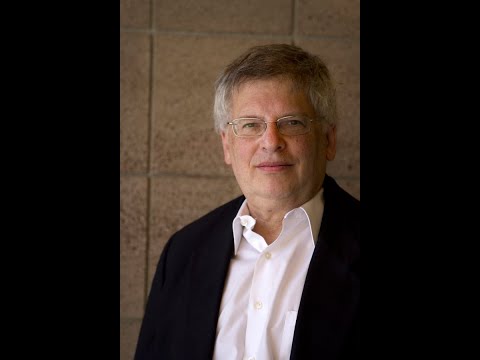
Roger Jo Ei Stawasz — SBZC from a historical perspective
Sunday, March 9, 2025
I've been asked to say a few words of introduction for our speaker today, Jo Ei. Well, first, he's my partner, but most importantly — could I grab one of those questions? A long-term practitioner of Zen at various locations in Northampton, then not a monastery, but this and all other kinds of places. Served as liturgy master for a group — Oxbow Zen Sangha in Northampton. And when we were here last time, he became curious about the history of Santa Barbara Zen and all the personalities and people involved. And that's all I have in terms of introduction. Thank you, Kenko.
Well, first of all, I'm impressed that no one missed the daylight saving time change. Or did anyone? We were going around last night, it's like, oh, so they do that here in California. Should we check? I said, no, we have smartphones. They're smart. They'll tell us. And it worked out.
So I can't top the introduction. When we got here, as Kenko said, I've done some research in the past about people that have been involved, people I got to know personally or found out about. But when we first got here, I decided to check the website too, to see what kind of updates were there. And to tell you the truth, I'm just totally impressed with the website. It just looks so great. And as I was looking at it, I saw a picture of me, Kenko, and Joel — I think that's how it's named. When we used to sit at the McVeigh House at the Museum of Natural History, and it was in one of these windows, and there was a seat that was just big enough for the three of us. And each of us had a book, whether it be the Doan book or the Eno book, and we're all exploring. You know, like, oh, this past — it just warmed my heart to realize that this too is our sangha, not just Oxbow-Huzan in Northampton or the Village Zendo in New York City. So yeah, that was really good to see.
But it was also interesting to see that, according to the website, 1973 is when Zen got established in Santa Barbara. And they don't mention that there were two people that came up from ZCLA, and I'm pretty sure I'm going to be talking about one of them, but I don't know who the other is.
One of the things I found interesting is I think I signed up to do this talk about seven weeks ago. And for me, it's been like working on a koan. You know, what is it I want to say? If you've done any koan practice — at least the way I'm doing them now in the Blue Cliff Record — you have what's called a case, and then there'll be commentary on the case, and then there's a verse, and there's commentary on the verse. And quite often in doing koans, usually one of the first things I do is, if I can, if it's not too long, I'll write it up again, because what I found is that by writing something out I retain more of it and you tend to embody it. And that's a lot of what our practice is about. And quite often I'll also read the whole thing over like once, twice, three times, and just sit with it and see what comes up.
And so some things finally did start coming up. I know when we were here in 2019, I gave a little bit of a talk about some of the stuff that we had discovered at that time, that some people knew about. But I guess it didn't continue on. You know, like, some cultures do have a verbal, oral tradition where things get passed on, stories are told, and whatnot. And so this story wasn't told at that time, that I was aware of.
So another interesting thing I found was that when I signed up it was about seven weeks ago, and then in doing some reading I learned that from the moment that the Buddha became enlightened, it was seven weeks before he started teaching. Not that I'm drawing an analogy — I would never do that. But at first, he just wanted to sit in the peace and understand what he had experienced. And according to the legend, it took some Brahma deities to convince him that there are people that could understand this. And so it took a while for him to figure out how to do this. And then seven weeks later, he gave his first teaching, The Turning of the Wheel.
So there are three people I want to tell you about that I feel have contributed greatly to this community over the years. Two of them I got to know personally, and one of them I didn't get to know. She was long gone before we even came here for the first time.
So what do I feel is important to tell you about these people? And I had to question that myself. What's so important about this? And the answer came to me in the dedications that we do for the Song of the Jewel Mirror and the Identity of Relative and Absolute. In the dedications for both of those, there is included the words: we also dedicate these merits to all the temples of the White Plum lineage, to the Zen Peacemaker Order, and to all ancestors of the extended sangha. And that's what really grabbed me — to all ancestors of the extended sangha. To me, this was the key: that these three people are ancestors of the sangha.
So the story starts with Kenko and I coming to California in 2012. And actually before that, he had done a lot of research on, you know, what is there for Zen groups out in Santa Barbara? And there were a couple that we had noticed that looked interesting. One had to get scratched off — I think it was the one we were most interested in at the time — because, from what I understand, you know, you have a lot of fires here, and there was a fire and that place got burned down. So then we found this group, and at the time it was held at the house of a Tony Johansson, not far from here on Ontare Drive. And Tony was a really dedicated person and a very interesting person. I only knew him for the six months we were here then.
But Tony used to live in the San Francisco area, and he and his first wife, Antoinette — they were known as Tony and Toni — used to drive Suzuki Roshi around to give talks that became the book Zen Mind, Beginner's Mind. And I just found that amazing. It's like, oh, here's this such a direct connection to this San Francisco Zen Center teacher. So it really impressed me.
And actually, this is all documented. There's a book I have here — I don't know if any of you have seen it — Crooked Cucumber. So this is a book about Suzuki Roshi's life, and it's written by David Chadwick, who was ordained by Suzuki, I think in the 1960s. But Chadwick wrote the book, and he's continued — he also created a website where they've updated information from the book about different people that were part of that saga back at that time.
And there's one interesting story about Tony that I really like. His wife was contacted — his former wife, Antoinette — at one point, and she mentioned, and I didn't know this, I knew Tony had a rakusu, but I never knew his Dharma name. I don't think he used it at that time. So his wife and he both took jukai with Suzuki Roshi in 1973, I think it was. And Suzuki gave her the Dharma name Toin Jundo, which she was told meant something like essence of plum or peach blossom. And she couldn't quite remember what Tony's name was, but she knew it started with an R and had something to do with a Zen master. And I think Koan found out about this, because on the website Chadwick mentions Koan reaching out to him when memorial services would be done for Tony. And they figured out that Tony's name was Reiun — R-E-I-U-N.
And the legend is that Reiun was a Zen master, or became a Zen master. But before that, he went to the top of a mountain and decided he was going to stay there until he became enlightened. And he didn't become enlightened on the mountain. And finally, in his disappointment, he came down from the mountain. And as he was doing that, he passed through a peach orchard in blossom, and he became immediately enlightened.
So that's just such a wonderful story, because a teacher will give a student a name depending on various things — what they see with the student, or what they think they need to discover or learn, or whatnot. And so I was wondering, what does that say about Tony from Suzuki's perspective? Was it something like, your enlightenment is right here, you don't have to go up on the mountain? Or could it be something outside? I don't know. But I just found that really pretty amazing.
So Tony and Antoinette didn't stay together. They divorced. And I think around 1973, Tony, as a divorced father of young children, moved to Santa Barbara. I'm not exactly sure what he did for a living, because he was retired at the time, but he was really big into old-time music. He played in a lot of venues around here.
So I really can't say too much about him myself. Like I said, I only knew him for those six months. But I've noticed how he opened his home to us and to others, and the efforts he went through in creating the space in his home — it was a room probably about as big as from these zabutons back — that he would move furniture out of, he would clean the floor, and set up zabutons. And there was a little patio outside that room where quite often after the sitting we would gather for tea.
So instead of me trying to say what I thought about Tony, I figure I'd let someone that knew him a little bit longer speak. There was a friend, Larkin, who was a long-time friend of Tony's — he said 25 years. And Tony died 10 years ago last month, so it was February 4th, 2015. He said:
"On February 4th, my best buddy and musical companion of 25 years left us here on Earth, continued his whole journey to another place. Tony Johansson was a mentor to dozens, if not hundreds, of beginning musicians in the Santa Barbara area. He was voted a local hero two years ago. He began a jam session in his home some 30 years ago and opened the door to all the old-time music world. He was a Buddhist with a skeptical twist who was exceptionally good at keeping it real. No nonsense. Once I noticed, he took into his home those who needed a temporary place to stay. No questions asked. He had a sly smile and a generous heart."
I think it was our last sitting of that year, before we had to return to Massachusetts, that we had another tea gathering afterwards, and Tony had created a song for us that he played for everybody. It's called "The Laid-Back World." And I think we still have a recording of it somewhere.
So also on our first visit to Santa Barbara, we connected with Sensei Koan. I don't know how many of you have known him. I think he died late last year. October. So this was at the suggestion of then-Sensei Yukon Marko, who was a teacher at the Boundless Mind Zendo. They had not long before that moved to the Massachusetts area from the West Coast. And he was involved in the sangha that we belonged to at that time. So she found out that we were going to California and sent an email — I think it was a Facebook thing or something — saying you ought to connect with this guy, Sensei Koan.
And we did. We met him, we had coffee with him. He came to Tony's one time that I remember. But Tony had been running sittings at his house for a long time, and that was his space. And I think Sensei Koan recognized that and didn't try to interject himself, other than the one time I remember him being there. But within a couple of years, Tony's health deteriorated, and I think he asked Sensei Koan at that time to take over the group, which he did. And again, Tony died 10 years ago last month.
So we returned in 2019 for another six months when Kenko was on sabbatical at UCSB. And during one of the services at the McVeigh House, Sensei Koan decided he was going to have a memorial service. And the memorial service was for a woman by the name of Flora Courtois. And Sensei Koan described her as being a founder of ZCLA. And I was like, who? What? I've never heard of this person. Who is this? And this surprised me because ZCLA — we call it our grandmother temple. The Village Zendo is our mother temple, and then we have our own little sangha in Northampton. So I had to find out.
What I found is that Flora died 25 years ago, I think it was February 14th. And she had gotten involved with Maezumi Roshi before there was even a ZCLA. I mean, she was very instrumental in kind of like helping him in this different culture from Japan — teaching him English and a number of other things. But the most interesting thing about her is that she was recognized by one of Maezumi's teachers, Yasutani Roshi, as having had an enlightenment experience. And this is something that had happened to her starting back in the 1940s.
Now, Suzuki Roshi and the others didn't start coming here until the late 50s and early 60s. Matter of fact, if you've seen the interview of Sensei Koan that I remember seeing in the emails, he mentions how back around 1960 when he started practicing, there were only like five teachers in the United States.
So what happened, I guess, is that Flora was having these experiences but she didn't have any context for it. She didn't know anything about what was going on or why this was happening. And eventually she started to hear about this teacher in the LA area, and started sitting with him. And again, Yasutani was a teacher of Maezumi's. So she began to have contact with him. I guess she really liked him, so she asked to speak with him one day and explained to him what had transpired, what had happened. And it was Yasutani and Maezumi and Flora — and I guess Maezumi was translating for Yasutani what Flora had said. So it was a three-way exchange.
He asked Flora to write down what had happened for her. And she created a little book, and it's called An Enlightenment Experience. I don't have that book. I think Bill mentioned to me one time he had the book somewhere but couldn't find it.
In this version of The Hazy Moon of Enlightenment, which is written by Maezumi Roshi and Bernie Glassman — and this is the 2007 edition — I think the previous editions didn't include Flora's account. And it's a short thing, maybe 16 pages. But also Yasutani wrote a few pages about his experience with her.
And this is what he writes: "Although utterly unaware of what Buddhism or Zen was, Flora Courtois attained enlightenment by herself through her unrelenting struggle with the question, 'What is reality?' This is called having no teacher, or enlightenment by oneself. This is the same sort of awakening Shakyamuni Buddha attained when he saw the dawn star on December 8th, two and a half millennia ago."
At the time, Flora lived in Pacific Palisades. But shortly after that, I think in the early 1970s, she moved up to Santa Barbara and started having sittings — the way I understand it, twice a week in her house, a weekday and a weekend. And these went on almost to the day that she died. So again, she died 25 years ago this past February.
Basically all I know about her is what I've read in this book, what I've learned from people I interviewed back in 2019, and also what I found out from an interview done by two teachers from ZCLA shortly before Flora died. And it's really a fascinating read, and I think it would be a great thing to include in the archives of this place here. I have an electronic copy of it, along with a print copy.
But just her life and the amazing things that she accomplished. And again, as with Tony, I've never known her personally, or, you know, if I did, not enough to really comment on her. But I ran across a memorial for Flora by Roshi Joseph Bobrow. And Roshi Bobrow — I don't know if any of you remember — but when Sensei Koan was in the assisted living, we had the Zenkai there, and Roshi Bobrow was among the people that came to that as well.
So he writes: "Flora, I first met you in 1973 during your trip to Maui to visit my teacher, Robert Aitken, his wife Anne, and the community of the Maui Zendo where I lived and trained. You gave a crystalline talk on attention and Zen practice with no frills or jargon. You captured the heart of practice. I visited you in your home in Pacific Palisades and later Santa Barbara. You were also a psychologist and we had long talks on areas of common interest, such as ethics, psychological growth and Zen practice, and physiology and meditation practice. You were a student of consciousness, and your unceasing curiosity and depth took you into biofeedback and later into studying the brain and its relation to spiritual unfolding. You began a foundation for the scholarly study of mysticism and consciousness, supported many other related causes and groups, and were a founder of the Los Angeles Zen Center. You embodied beginner's mind, always open to new ideas, taking them in and thinking deeply about them, and adding your own often remarkably creative theories and insights. Your realization was deep and clear. You knew in your bones that our essential nature is embodied rather than talked about. You eschewed jargon and sectarianism and remained the truth seeker until the day you passed."
So I'm aware that the memorial service for Sensei Koan is going to be happening today, and I believe it will be recorded. So I hope you'll be able to see it sometime. Because I have my memories of Sensei Koan and I'll share one that was kind of a favorite. But I'm sure there are other people that could say a lot more — and there are probably people in this room that could say a lot about him too.
My favorite memory of him, or what I think said something about him, was when we came back in 2019 and he asked me to be his attendant for Jukai sesshin. He was getting unsteady at that time, and so Kenko and I had to assist him a little bit — he would lean on me as we would be making our entrance for the service. And I don't know if you're — how many are familiar with a priest's bowing cloth? The okesa has a gold trim on the outside, so it seems like this special, special thing. And he didn't feel steady enough to put the bowing cloth down and hold it back up, so he asked me to carry it over my arm as his attendant. And the first time I did that, it was like, whoa, what is this? And for me it was a big deal. And for him, it was just: this is what has to be. So that's pretty much my talk on this. I think what I want to do is just open it up if anyone has any questions about anything.
I know I talked about, if there was time, saying a little about liturgy, which is a lot to get into. I would have to make it kind of skeletal, I think.
Roger Jo Ei Stawasz: I'd just like to add that my rakusu was stained — but this is: Koan Sensei wrote this to me, October 9th, 2016. And he gave me the koan Mu, and I had seven years, because that's how long it took some people to get to it. So seven years came and went. And I don't know — I wish I could see him now and say, help me out.
It was always interesting to do interviews with him, because he always had that impish smile. And the sense of humor is what I remember from him.
Roger Jo Ei Stawasz: I'm glad you brought that up, because there was something else I've been thinking about since we came here. I used to Zoom in with the Boundless Mind Zendo in the morning. And with the three-hour time difference, that became impossible to do — I hadn't had enough coffee by that time. So I started doing the evening sittings. And in the evening sittings, they do the evening gatha. And I don't have it memorized, but basically, to some extent, you know — life is short, practice, years go by and we're gone.
And to me, this is an example of thinking back to 1973 when people first started gathering here. And it's not like a linear thing. I think during that period of time with Flora and Tony, there were probably simultaneously a couple of sittings and things that were happening, if not more. I know a number of years ago in Northampton, we had the professor of Asian studies at Smith College organize this thing. It was called Many Flavors of the Dharma, where Buddhist groups from the area got together. I was just stunned as to how many different groups there were — you know, small little personal zendos that people have, and things like that. So it was really something.
But the evening gatha is the thing that really kind of brought this together for me, along with the dedication — and now especially, now that Sensei Koan is gone, these people are basically, from my perspective, ancestors of this sangha.
Question: I'd like to say thank you for the talk and for bringing Sensei Koan into the room with us today, and Flora, who I'm really happy to hear about — the passage you read was really nice to hear. And Tony, of course. So thanks again.
Roger Jo Ei Stawasz: Thank you.
Question: Well, I feel really old because I sat with Flora in her house. She was just a wonderful person, even towards the end of her life. When I moved here in '86, eleven days later I had my first child, so I really couldn't do much Zen practice for a number of years, or at least organized practice. So I remember — I called up the number, because I had recently moved from Los Angeles. Anyway, I called the number, and it was Sensei Koan who answered, and this was back in '86, '87. And I just explained, you know, I was interested but couldn't come. And he said, well, you know, when you're able to come. And so yeah, we sat in Flora's living room. And if there were more people, she would just put zabutons wherever in the house so that we could sit. And she would give a little reading, and was just very unassuming, but present. It was just a treasure that I was able to do that.
And then we moved to Tony's house. And I couldn't believe how much work he did in preparing for each Sunday sitting. Not only preparing the room, but he would go out and rake the yard for the kinhin path. So we would all help put it back together, but with him doing the initial prep — quite an effort. And a story that I remember: Tony would say that in his travels with Suzuki Roshi, all these people were becoming priests. And so Suzuki Roshi said, "Well, Tony, do you want to be a priest?" And Tony thought about it and said, no. And then Suzuki Roshi said, "Oh, good." I really could understand that.
But Tony was amazingly dedicated. And his wife, Rachel — they were just wonderful, I would say godparents to this sangha. Meanwhile, Gary, Sensei Koan, moved to LA to study more intensively there at ZCLA. And then when he retired and came back to Santa Barbara, at that point Tony's health was declining, and so we moved to McVeigh House at the Museum of Natural History. And two of our sangha members then formally asked Sensei Koan to be our teacher at that point. That's when we got really organized — had the chant books done, really became more formally incorporated as a 501(c)(3), and just really brought a lot of life and organization to this group. And even ordained a couple of priests. We had a big ordination ceremony, several days long. It was very exciting seeing all that happen.
Question: Yeah, it's interesting — even today, there was a young man, I guess he's not so young, but he stopped by as we were setting up. Justin — he was part of the group at Tony's house. And then when he moved away, he got married, he donated some of these zabutons and things. So as it turns out, he's working here but living 250 miles away, so we haven't had a chance to sit together. But he did stop by. It's just amazing how, with your talk on the history and all the continuing threads — and we've got wonderful new faces, and it's just lovely to see how the sangha, you know, we're still here, still sitting. And it's lovely. So thank you so much.
Roger Jo Ei Stawasz: Thank you.
Question: I forgot to mention about Koan being the guiding teacher at that time, because before that the group didn't really have one.
Question: I'm sure I'm going to lay back — but not really. For me, it all began many years ago at Bonds, at the checkout counter, where in front of me was Sensei Koan. And I had known him around town, but we never really had a connection. And we connected. And he invited me to come and sit with the Santa Barbara Zen community. And I sat a few times at Tony's, and then was part of the transition to McVeigh, where, through his dharma teachings, he guided me in the practice of Zen. And we became friends over the years and would sit at the coffeehouse — Renaud's here in Santa Barbara — and we would talk about this, that, and the other.
And one of the conversations was about the transitioning, and we agreed that it would be a good thing to go through the transition bravely and with curiosity. And just a few months ago, I sat with Koan as he lay in his bed, holding his hand and chanting the Heart Sutra — in particular, "no ending of old age and death... no old age and death, and no ending of old age and death." And I remember chanting that continuously while holding his hand as I chanted the Heart Sutra as well. And I would also, while stroking his hand, say: remember to let go, be brave, and be curious. And also to mentor me in this moment, so that when it's my turn, I too will be surrendered, brave, and curious. And the realization that in that moment, billions and billions of sentient beings had transitioned before, and billions and billions will transition thereafter, and I will be one of those. With curiosity, I hope.
Question: I didn't know any of those people. I've been in Santa Barbara since '75, and I don't know — maybe there were some near misses. I was particularly intrigued by your story about enlightenment through peach blossoms. That really intrigued me. I just finished, in our winter practice period with the Jaco Zen Center, reading the Vimalakirti — it's not really a sutra, it's — I think it's titled "Holy Teaching of Vimalakirti," but I can't remember the full title. And in that book there's a full Buddha-field, a whole world where all of the bodhisattvas are enlightened by the perfume that emanates from some trees in their world. And that's all they have to do — sit under those trees and smell that perfume, and they gain enlightenment. I had never heard — I mean, that was a completely new concept to me. And now here it is again. My jasmine is blooming in the yard right now. I should spend more time standing there.
Roger Jo Ei Stawasz: Yeah.
Question: So who was it again — remind me — who was it that smelled the peach blossoms? Roses and orange blossoms do it for me. Who was it in your story? Was it Tony? Was it Reiun? Who was the Buddhist that — Tony's Dharma name was that same person?
Roger Jo Ei Stawasz: I think Reiun — R-E-I-U-N. He's supposedly a Zen master of the Tang dynasty. I don't know how far back that goes.
Question: Well, thank you for gathering this information about the history of the sangha. It's really nice to understand the archive and that sort of tradition over 50 years or more of this group. I didn't know if you'd had a chance to read any of Tony Johansson's poetry.
Roger Jo Ei Stawasz: I haven't seen it, no.
Question: Because I think it may have come out of his musicianship and writing songs, but he was a really talented, thoughtful poet. And I think, Elisa, I have a few. I think you may as well. I'd love to share those with you as you put this archive together.
Roger Jo Ei Stawasz: Yeah, actually, now that you mention it, there was one poem of his I ran across, but I felt it was better for this to hear from someone — and it was an interesting poem. Very, very reflective, very thoughtful about Zen and practice.
Question: Thank you. Thank you.
Roger Jo Ei Stawasz: So we end with the Four Vows. Page 41. At least three times in English, then Japanese, and then in English — whatever language you want.